When you hear someone in the US say "hit the books" or "spill the beans," they're not talking about cooking or messy dishes—they're using idioms in the US culture to pack a punch with everyday language. These figurative phrases pop up everywhere from office meetings to coffee shop chats, and while they can trip up newcomers, mastering them opens doors to sounding natural and connecting with Americans on a deeper level. Let’s break down the most common idioms you’ll encounter, what they really mean, and how to drop them into conversation without overdoing it.
Everyday Idioms You’ll Hear on the Street
Americans love to keep things simple, and that extends to their idiomatic expressions. Phrases like “costs an arm and a leg” for expensive items or “piece of cake” for something easy are staples you’ll pick up almost instantly. The key is noticing how these idioms soften direct statements—instead of saying something is costly, “costs an arm and a leg” adds humor and personality. You’ll hear these in casual settings like grocery runs or quick chats with coworkers, making them perfect for building rapport without trying too hard.
 Understanding Idioms in the US: Origins and Contexts
Many idioms in the US have roots in baseball, military slang, or old-fashioned farming terms. For example, “ballpark figure” comes from estimating game statistics, while “greenhorn” originally described inexperienced cowboys. When you understand the background, idioms stop feeling random and start making sense. This historical layer helps you remember them and use them appropriately—like not using “raining cats and dogs” in a formal business setting, even if the meaning is clear.
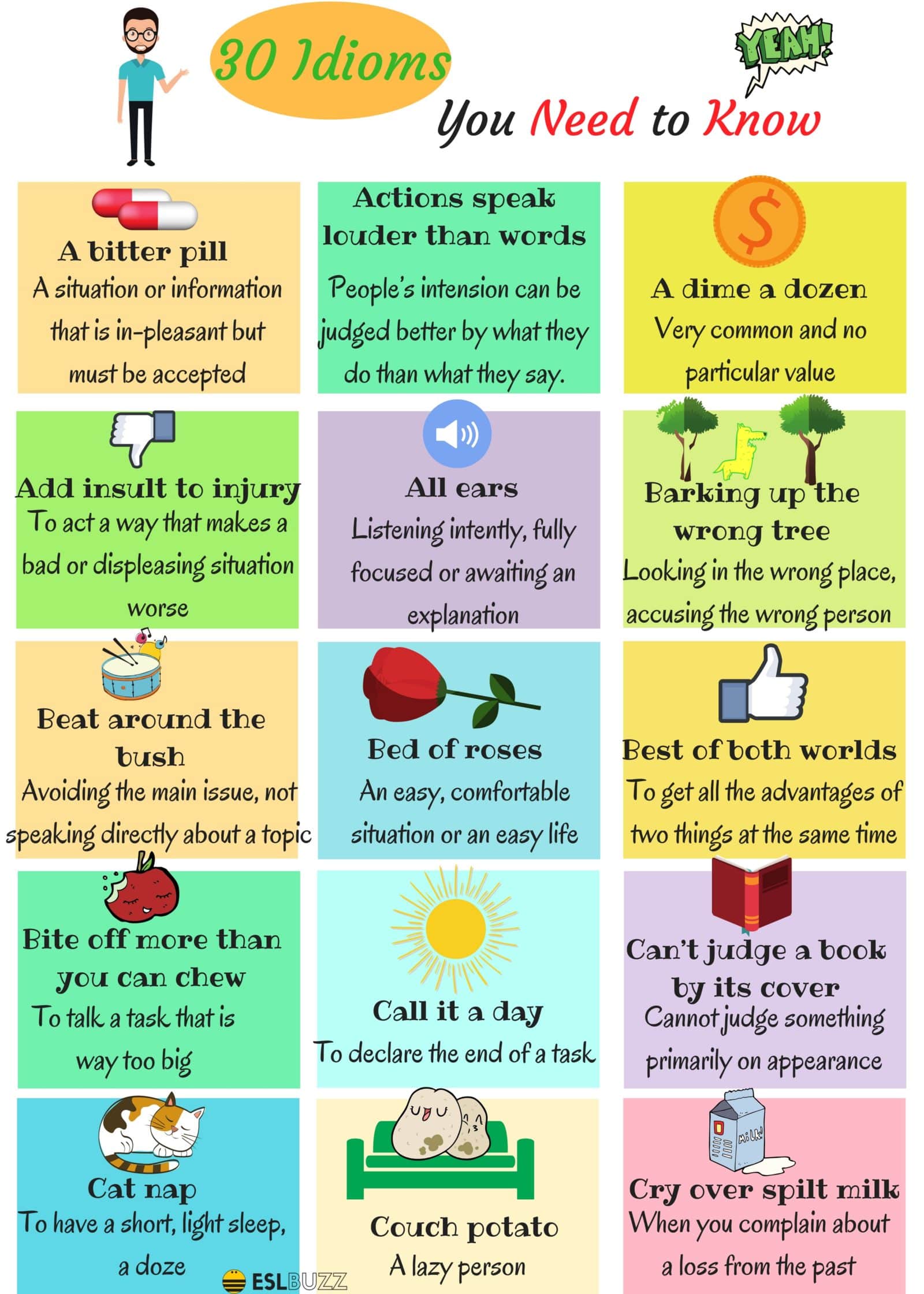 10 Must-Know Idioms for Instant Confidence
- Break the ice – Start a conversation in a tense situation
- Touch base – Check in briefly with someone
- Cost an arm and a leg – Very expensive
- Hit the hay/snooze – Go to bed or take a short nap
- Spill the beans – Reveal a secret
- In a heartbeat – Immediately or very quickly
- Bite off more than you can chew – Take on too much responsibility
- Let the cat out of the bag – accidentally reveal a secret
- Upset the apple cart – ruin a situation with your actions
- Kill two birds with one stone – accomplish two goals at once
Practice these aloud and notice how they change the tone of your sentences. Try using “break the ice” when meeting someone new or “touch base” in a quick email update—it shows you’re not just learning English, you’re speaking it with rhythm.
How to Avoid Common Idiom Mistakes
One of the fastest ways to sound off when using idioms in the US is mixing up their meanings or using them out of context. Don’t say “I’m about to die” when you’re just tired—Americans will laugh, but not in the way you want. Instead, try “I’m exhausted” or “I need to recharge.” Another trap is literal translation—“it’s raining cats and dogs” makes no sense if taken word-for-word from another language. The golden rule? Use idioms in the right setting, and when in doubt, stick to clear, simple language until you’re confident.
Build Your Idiom Habit Naturally
The best way to absorb idioms in the US is through exposure—watch TV shows with subtitles, listen to podcasts, or read articles like the ones linked above. Don’t stress about memorizing every phrase. Focus on the ones that fit your daily life, whether that’s “on cloud nine” after a good day or “hit the gym” when it’s time to work out. Keep a mental note when you hear something new, and try it out the next time the moment feels right. Over time, these expressions become second nature—and you’ll find yourself understanding more than just the words, but the culture behind them.
When you hear someone in the US say "hit the books" or "spill the beans," they're not talking about cooking or messy dishes—they're using idioms in the US culture to pack a punch with everyday language. These figurative phrases pop up everywhere from office meetings to coffee shop chats, and while they can trip up newcomers, mastering them opens doors to sounding natural and connecting with Americans on a deeper level. Let’s break down the most common idioms you’ll encounter, what they really mean, and how to drop them into conversation without overdoing it.
Everyday Idioms You’ll Hear on the Street
Americans love to keep things simple, and that extends to their idiomatic expressions. Phrases like “costs an arm and a leg” for expensive items or “piece of cake” for something easy are staples you’ll pick up almost instantly. The key is noticing how these idioms soften direct statements—instead of saying something is costly, “costs an arm and a leg” adds humor and personality. You’ll hear these in casual settings like grocery runs or quick chats with coworkers, making them perfect for building rapport without trying too hard.
Understanding Idioms in the US: Origins and Contexts
Many idioms in the US have roots in baseball, military slang, or old-fashioned farming terms. For example, “ballpark figure” comes from estimating game statistics, while “greenhorn” originally described inexperienced cowboys. When you understand the background, idioms stop feeling random and start making sense. This historical layer helps you remember them and use them appropriately—like not using “raining cats and dogs” in a formal business setting, even if the meaning is clear.
10 Must-Know Idioms for Instant Confidence
- Break the ice – Start a conversation in a tense situation
- Touch base – Check in briefly with someone
- Cost an arm and a leg – Very expensive
- Hit the hay/snooze – Go to bed or take a short nap
- Spill the beans – Reveal a secret
- In a heartbeat – Immediately or very quickly
- Bite off more than you can chew – Take on too much responsibility
- Let the cat out of the bag – accidentally reveal a secret
- Upset the apple cart – ruin a situation with your actions
- Kill two birds with one stone – accomplish two goals at once
Practice these aloud and notice how they change the tone of your sentences. Try using “break the ice” when meeting someone new or “touch base” in a quick email update—it shows you’re not just learning English, you’re speaking it with rhythm.
How to Avoid Common Idiom Mistakes
One of the fastest ways to sound off when using idioms in the US is mixing up their meanings or using them out of context. Don’t say “I’m about to die” when you’re just tired—Americans will laugh, but not in the way you want. Instead, try “I’m exhausted” or “I need to recharge.” Another trap is literal translation—“it’s raining cats and dogs” makes no sense if taken word-for-word from another language. The golden rule? Use idioms in the right setting, and when in doubt, stick to clear, simple language until you’re confident.
Build Your Idiom Habit Naturally
The best way to absorb idioms in the US is through exposure—watch TV shows with subtitles, listen to podcasts, or read articles like the ones linked above. Don’t stress about memorizing every phrase. Focus on the ones that fit your daily life, whether that’s “on cloud nine” after a good day or “hit the gym” when it’s time to work out. Keep a mental note when you hear something new, and try it out the next time the moment feels right. Over time, these expressions become second nature—and you’ll find yourself understanding more than just the words, but the culture behind them.
Burn Bridges Idiom Meaning And Sentence - Infoupdate.org

Burn Bridges Idiom Meaning And Sentence - Infoupdate.org
8 Tricky Idioms About Money With Meanings Infographic

8 Tricky Idioms About Money With Meanings Infographic
56 Rare Idioms In English With Meanings And Examples • 7ESL

56 Rare Idioms in English with Meanings and Examples • 7ESL