Idioms in American English offer shortcuts to emotional expression, but they can also trip up learners who take them too literally. This guide breaks down their function, common examples, and how to deploy them effectively without overstepping cultural boundaries. Think of it as a roadmap for navigating turn-of-phrase conversations with confidence.
Understanding the Cultural Logic Behind Idioms
Idioms are not just decorative language—they reflect shared experiences and values. In American English, they often emerge from historical events, regional dialects, or everyday scenarios. For instance, phrases like “bite the bullet” trace their roots to Victorian-era surgery, while “rule of thumb” evolved from a misunderstood legal principle. Recognizing these origins helps learners grasp their deeper significance rather than memorizing them as static rules.
Common Idioms Every Beginner Should Know

Start with foundational idioms that appear frequently in casual and professional settings. Money-related expressions like “in the red” (losing money) or “penny-wise, pound-foolish” (savvy in small things but imprudent overall) are surprisingly versatile. Others, such as “tip of the iceberg” or “hit the jackpot”, translate easily across contexts. Pair them with common verbs to build fluency: “We’re constantly bailing out the team” uses bail out idiomatically, implying urgent rescue efforts.
Navigating Literal vs. Figurative Meanings

Avoid the classic pitfall of interpreting idioms literally. Burn bridges, for example, doesn’t involve actual destruction but means ending relationships irreparably. Similarly, “break a leg” (fatefully wishing someone success) could mislead a learner into worrying about physical injury. Create a mental pause before reacting—like asking, “Is this describing a physical action?”—then flip the phrase to its intended meaning. This habit prevents embarrassing misunderstandings in meetings or social settings.
Choosing the Right Idiom for Context
Idioms vary in formality. A phrase like “by and large” fits academic writing, while “spill the beans” suits casual conversation. Misjudge the setting and you risk sounding out of place. For example, using “raining cats and dogs” in a business report feels unprofessional, but “go with the flow” might undermine authority in a crisis. Test your choice by asking: Would a local speaker use this here? Streamline your practice by keeping a “context journal” noting which idioms pair with specific environments.
Practicing Idioms in Real-Life Scenarios
Engage with idioms beyond flashcards. Watch U.S. TV shows or YouTube vlogs and pause when idiomatic phrases surface. Mimic them in sentences during solo practice or language exchanges. Online tools like Quizlet offer pre-made decks for American idioms, but tailor them to your interests—tech, sports, or pop culture—to reinforce retention. When drafting emails or texts, sprinkle in one idiom per paragraph to build muscle memory without overloading.
Idioms become conversational gold when deployed thoughtfully. Master their nuance, and you’ll signal not just language skill but cultural awareness—key for connecting authentically in American English spaces.
Idioms in American English offer shortcuts to emotional expression, but they can also trip up learners who take them too literally. This guide breaks down their function, common examples, and how to deploy them effectively without overstepping cultural boundaries. Think of it as a roadmap for navigating turn-of-phrase conversations with confidence.
Understanding the Cultural Logic Behind Idioms
Idioms are not just decorative language—they reflect shared experiences and values. In American English, they often emerge from historical events, regional dialects, or everyday scenarios. For instance, phrases like “bite the bullet” trace their roots to Victorian-era surgery, while “rule of thumb” evolved from a misunderstood legal principle. Recognizing these origins helps learners grasp their deeper significance rather than memorizing them as static rules.
Common Idioms Every Beginner Should Know
Start with foundational idioms that appear frequently in casual and professional settings. Money-related expressions like “in the red” (losing money) or “penny-wise, pound-foolish” (savvy in small things but imprudent overall) are surprisingly versatile. Others, such as “tip of the iceberg” or “hit the jackpot”, translate easily across contexts. Pair them with common verbs to build fluency: “We’re constantly bailing out the team” uses bail out idiomatically, implying urgent rescue efforts.
Navigating Literal vs. Figurative Meanings
Avoid the classic pitfall of interpreting idioms literally. Burn bridges, for example, doesn’t involve actual destruction but means ending relationships irreparably. Similarly, “break a leg” (fatefully wishing someone success) could mislead a learner into worrying about physical injury. Create a mental pause before reacting—like asking, “Is this describing a physical action?”—then flip the phrase to its intended meaning. This habit prevents embarrassing misunderstandings in meetings or social settings.
Choosing the Right Idiom for Context
Idioms vary in formality. A phrase like “by and large” fits academic writing, while “spill the beans” suits casual conversation. Misjudge the setting and you risk sounding out of place. For example, using “raining cats and dogs” in a business report feels unprofessional, but “go with the flow” might undermine authority in a crisis. Test your choice by asking: Would a local speaker use this here? Streamline your practice by keeping a “context journal” noting which idioms pair with specific environments.
Practicing Idioms in Real-Life Scenarios
Engage with idioms beyond flashcards. Watch U.S. TV shows or YouTube vlogs and pause when idiomatic phrases surface. Mimic them in sentences during solo practice or language exchanges. Online tools like Quizlet offer pre-made decks for American idioms, but tailor them to your interests—tech, sports, or pop culture—to reinforce retention. When drafting emails or texts, sprinkle in one idiom per paragraph to build muscle memory without overloading.
Idioms become conversational gold when deployed thoughtfully. Master their nuance, and you’ll signal not just language skill but cultural awareness—key for connecting authentically in American English spaces.
Idiom 1500 English Idioms From Az With Examples Vacation Cheat Sheet:
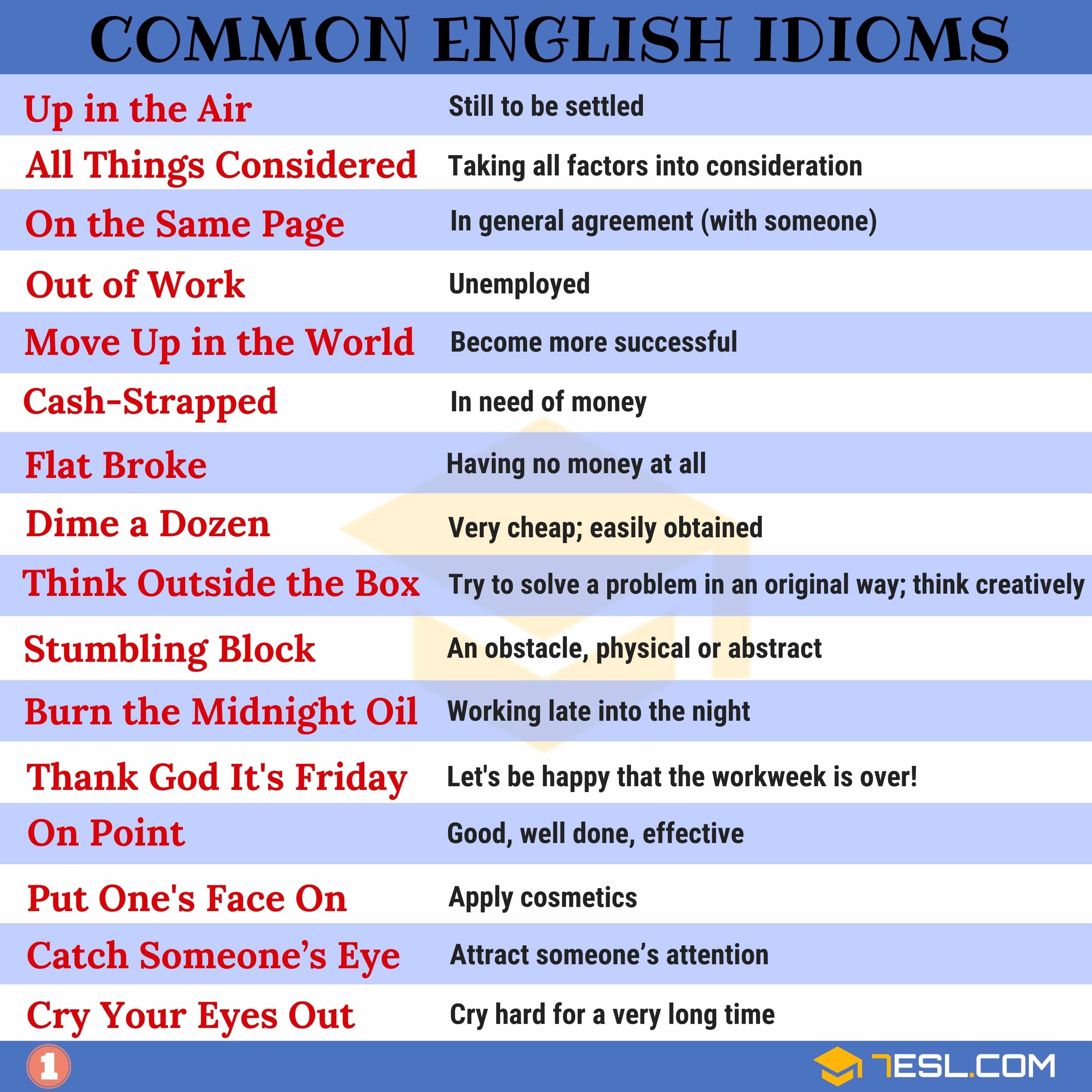
Idiom 1500 English Idioms From Az With Examples Vacation Cheat Sheet:
56 Rare Idioms In English With Meanings And Examples • 7ESL

56 Rare Idioms in English with Meanings and Examples • 7ESL
Idioms - ESLBUZZ
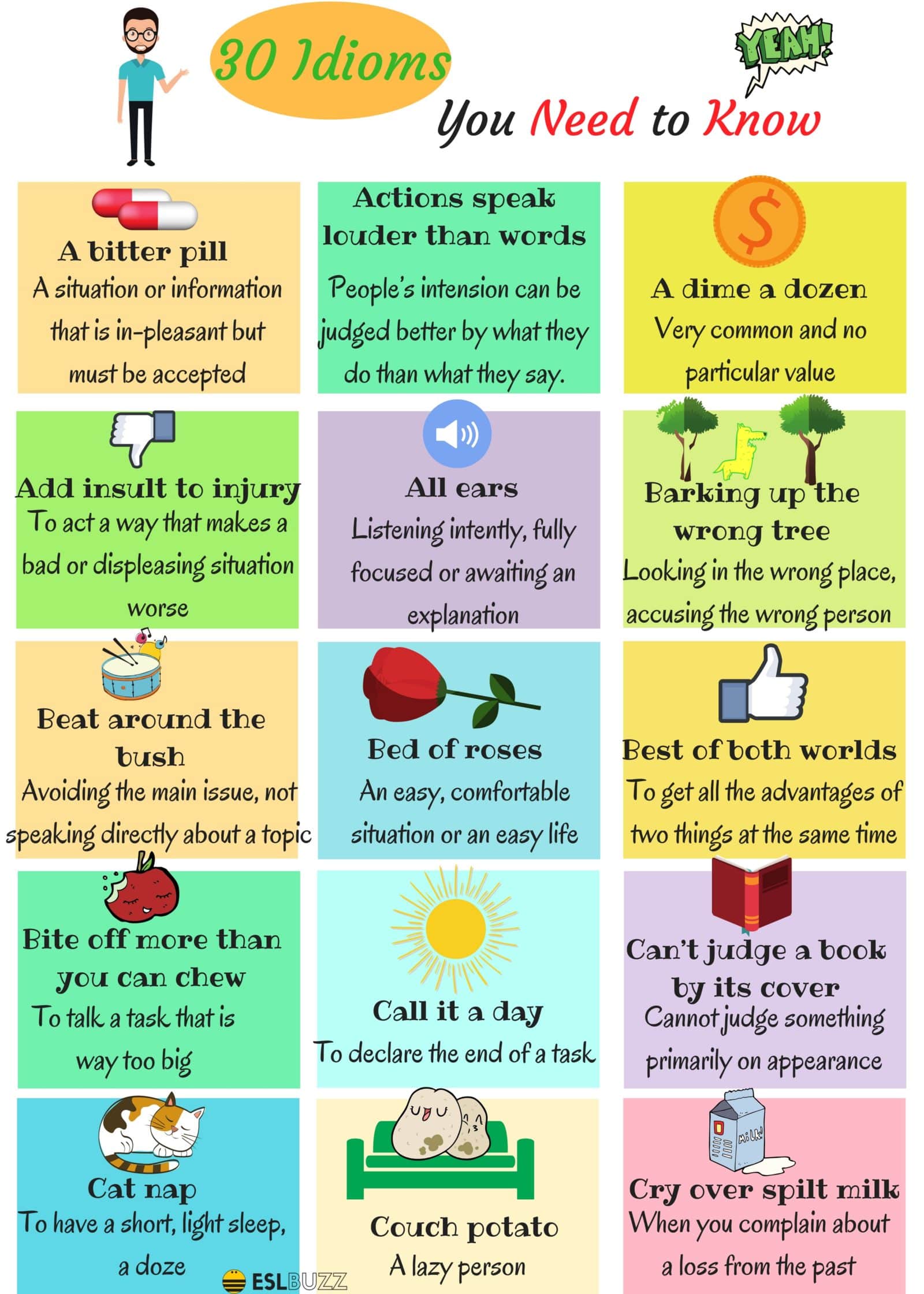
Idioms - ESLBUZZ